Department of Pathological Anatomy and Molecular Diagnostics
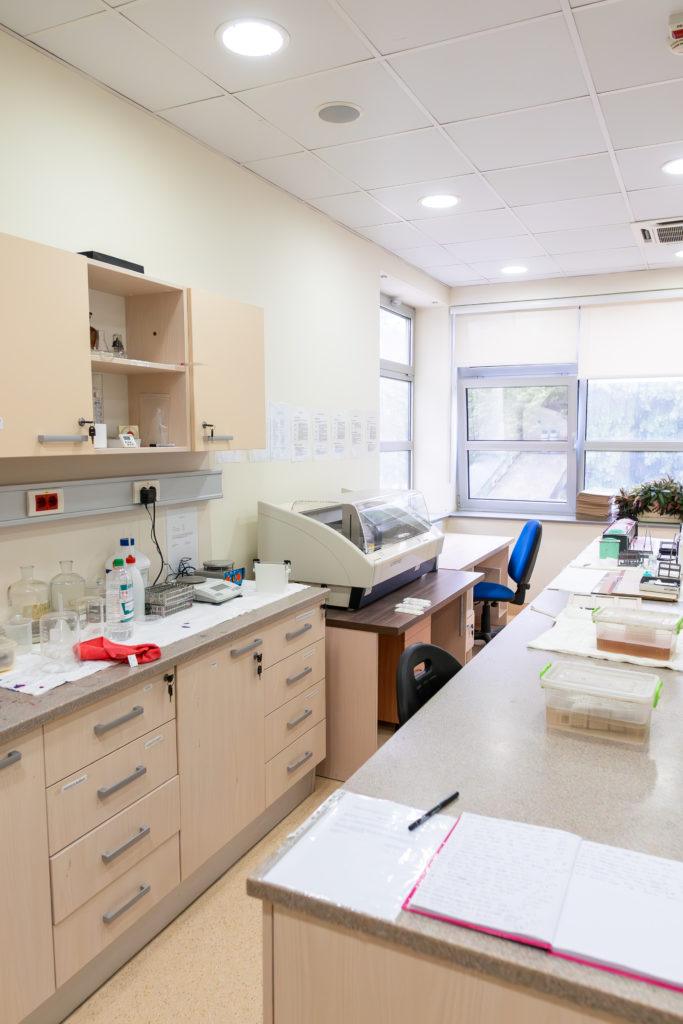
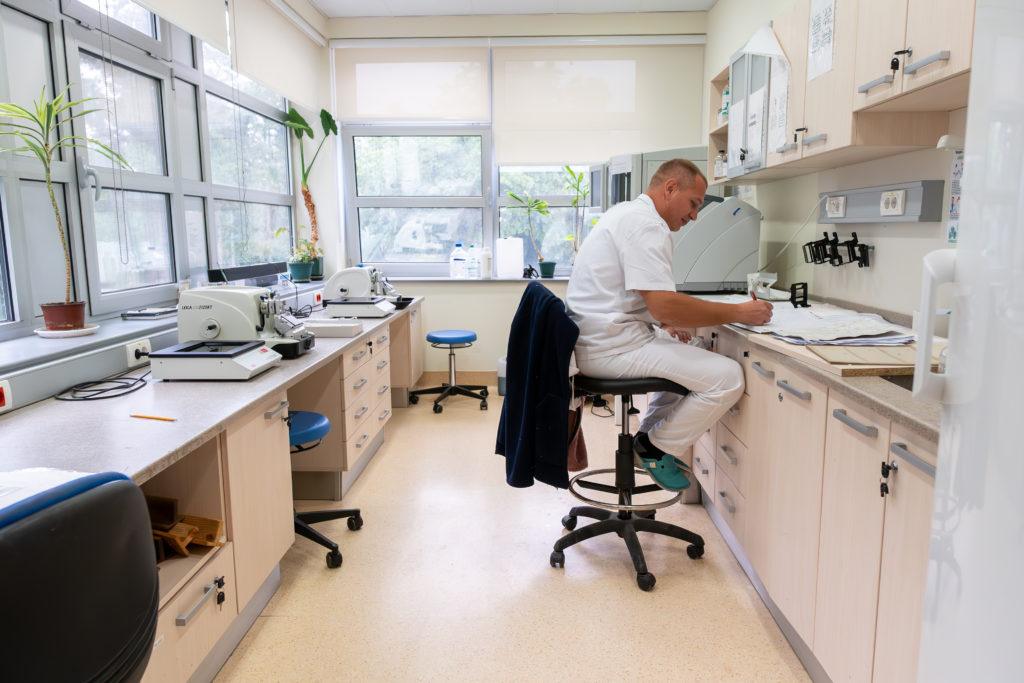
Upon the establishment of the Institute for Tuberculosis in Sremska Kamenica in 1960, a supporting diagnostic service was formed, the Institute of Pathology with Cytological Diagnostics, which over time became the Department of Pathological Anatomy and Molecular Diagnostics. The Department includes laboratories for Pathohistology, Cytology, Immunohistochemistry, and Autopsy.
The Department of Pathological Anatomy and Molecular Diagnostics primarily deals with the pathology of the lungs, pleura, and mediastinum, and to a lesser extent, the pathology of the digestive tract and the thyroid gland.
Annually, between 7,000 and 8,000 cytological examinations are performed. The material for cytological examination includes exfoliative cytology (bronchial washing: bronchoalveolar lavage; bronchial brushing; sputum and cytology of pleural, pericardial, and peritoneal effusions) and aspirational cytology (transbronchial aspirational cytology with a fine needle – “FNA”; transbronchial aspirational cytology with a fine needle guided by linear endobronchial ultrasound – “EBUS”; transthoracic aspirational cytology with a fine needle under CT guidance – “TTP” and FNA of peripheral lesions on the skin and enlarged lymph nodes. If necessary, an English rapid on-site evaluation – ROSE technique is performed to determine the adequacy of cytological samples obtained during bronchoscopy. Additionally, whenever the need and possibility arise, cytoblocks are prepared from cytological samples, allowing for immunohistochemical analyses.
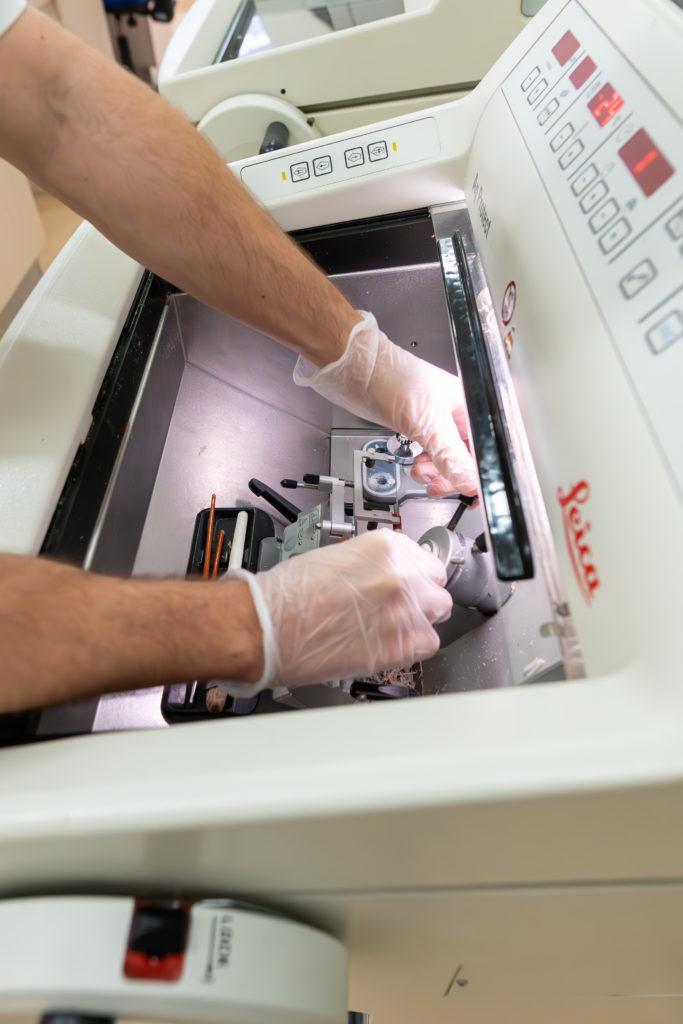
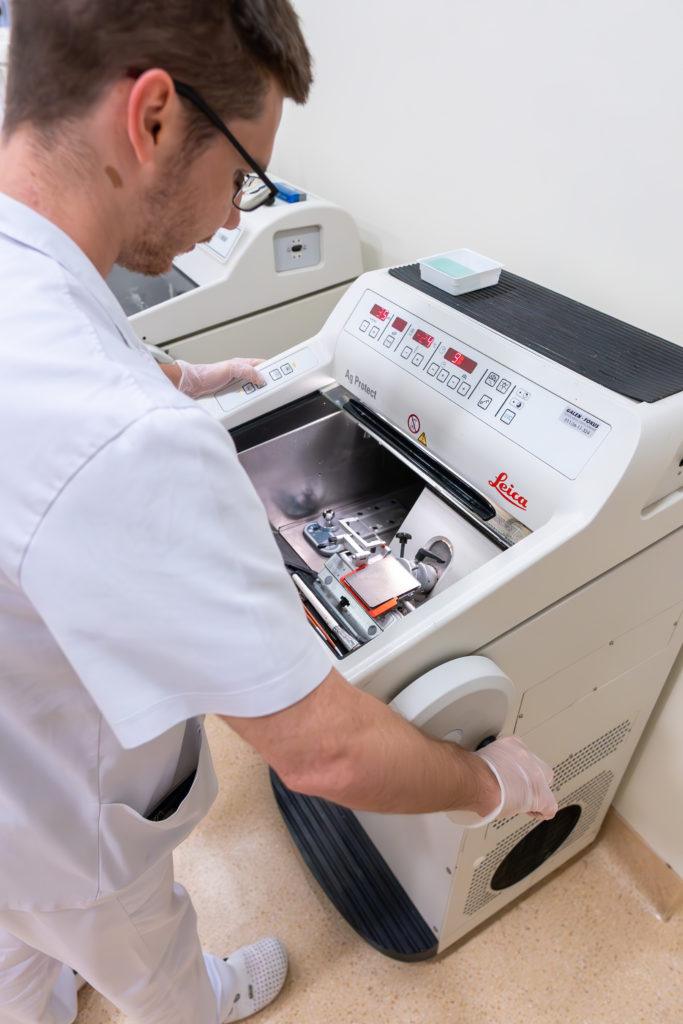
Annually, between 11,000 and 12,000 histological examinations are performed. The material for histological examination includes: bronchial biopsy, transbronchial biopsy (TBB), catheter biopsy (KB- “TBCA”), transthoracic needle biopsy under CT guidance; pleural biopsies obtained during video-assisted thoracoscopic surgery (“VATS”); biopsy materials obtained during mediastinoscopy; margin sections of the lung and lung resections. During the majority of surgeries performed at the Institute for Lung Diseases of Vojvodina, diagnostics on frozen sections, known as “ex tempore” diagnostics, are routinely conducted. On average, between 15 and 20 such analyses are performed daily. From the receipt of the material in the Service to the reporting of results to the surgical room, it usually takes between 7 and 11 minutes.