
Foundations and Golden Age of Phthisiology
1957.
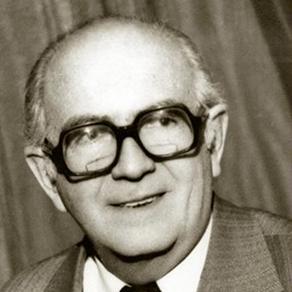
By the decision of the Executive Council of the National Assembly of the Autonomous Province of Vojvodina, on April 13, 1957, the construction of the Institute for Tuberculosis began, according to a design that reflected the most modern trends in world architecture of that time. In the same year, Dr. Stevan Goldman was appointed as the first director of this institution.
1960.
The construction was completed, and the complex was ceremonially opened on June 6, 1960, as a multidisciplinary healthcare institution.
1961.
The first patients were admitted, and the Institute, with its 756 beds, was the largest institution of its kind in the SFR Yugoslavia. By the end of 1961, it employed 454 workers, including 30 doctors. In the first 10–15 years of its existence, it was primarily focused on the prevention, diagnosis, therapy, and rehabilitation of tuberculosis patients.
Half a year after the opening of the Institute for Tuberculosis, the Department of Thoracic Surgery began operations. The first patient was operated on February 22, 1961, due to fibrocaseous cavitary tuberculosis. The operation was performed by the head of the Department of Thoracic Surgery, Prim. Dr. Marko Popović, with assistants Prof. Dr. Stevan Goldman and Dr. Ivan Piliš. The department had two modernly equipped oval-shaped operating rooms with built-in central oxygen and central vacuum systems, electrocauters, and Hanau lamps.
1965.
In early June 1965, Assoc. Prof. Dr. Ivan Fajgelj became the head of the Department of Thoracic Surgery at the Military Medical Academy, introducing cardiac surgical operations, including pediatric cardiac surgery, into the existing surgical repertoire.
The Era of Transformation and Challenges
1972.
Thanks to the successful work of the Institute, as well as the entire anti-tuberculosis service, the number of tuberculosis cases in Vojvodina is decreasing, and professional interest is increasingly directed towards other, non-tuberculous diseases of the thorax, which was the reason for changing the name of the institution in 1972 to the Institute for Lung Diseases and Tuberculosis.
1977.
In early 1977, a new phase in the development of the Institute began, marked by the integration of working organizations that represent the teaching base of the Faculty of Medicine at the University of Novi Sad into a single working organization. During this period, the Institute for Lung Diseases and Tuberculosis retained approximately 400 beds in Kamenica and 140 at Iriški Venac, as well as a Dispensary in Novi Sad. The microbiological, biochemical, radiological, and pathoanatomical institutes, as departments, became organizational units of the Institute for Lung Diseases and Tuberculosis.
The Institute for Lung Diseases and Tuberculosis has since performed three main activities: healthcare, education, and scientific research, which was not the case in the previous period. In addition to the existing Institute for Lung Diseases and Tuberculosis, the Institute for Cardiovascular Diseases was established in the same building, and the first director, Doc. Dr. Ivan Fajgelj, was appointed, while Thoracic Surgery temporarily became part of the Institute for Cardiovascular Diseases.
1982.
In 1982, the Department of Thoracic Surgery organizationally transitioned from the Institute for Cardiovascular Diseases and once again became part of the Institute for Pulmonary Diseases.
1984.
After detailed planning, extensive work on the revitalization and expansion of the hospital complex was completed. A fourth floor was added, and a partial fifth floor on both panels of the building. On the newly constructed fifth floor of the northern panel, a modern operating block with five operating rooms was established, two of which belong to the Clinic for Thoracic Surgery. At the same level, extending from the operating block, a separate unit for intensive surgical care was created, equipped with state-of-the-art equipment and monitoring.
1990–1999.
Despite the severe economic crisis and sanctions of the 1990s, the Institute manages to maintain the publication of its professional medical journal “Pneumon.” The journal has become a key platform for the education of pulmonologists in the country.
Due to the drastic increase in the number of lung cancer cases in the Balkans during the 1990s, the Institute reorganizes and positions itself as the primary center for complex oncological care for patients from all over Vojvodina. In 1993, following significant constitutional and administrative changes in the country, the institution officially began to be called the Institute for Lung Diseases of Vojvodina.
The Institute in the 21st Century
2000–2005.
In the early 2000s, the practice of forming special expert councils and committees (such as the Committee for Granulomatous and Interstitial Lung Diseases) was introduced. This allowed pulmonologists, radiologists, and pathologists to make decisions together regarding the most severe patients.
In 2005, the Institute became the holder and main coordinator of a large National Tuberculosis Project titled “Tuberculosis Control in Serbia,” under the auspices of the Global Fund (GFATM). This reduced the tuberculosis rate in Vojvodina to a historic minimum.
2006.
The Institute submitted the first official requests and urban planning proposals to the Provincial Government for the construction of the new block “Kamenica 2.” The goal was to address the pressing issue of the lack of its own radiation therapy machines.
2010–2015.
The Institute positions itself as a leading regional center for the implementation of international clinical trials of the latest oncological drugs in collaboration with global pharmaceutical companies.
In 2015, the first patients in Vojvodina began receiving the most advanced personalized and biological therapy for advanced stages of lung cancer, which dramatically extended the survival of patients.
2016.
With the opening of the modern facility “Kamenica 2”, the Institute makes a historic leap. By establishing the most advanced Radiotherapy Department and acquiring top-notch linear accelerators and CT simulators, oncological patients are provided with comprehensive treatment (diagnostics, surgery, chemotherapy, and radiation) in one place, without waiting lists. Advanced radiation techniques (3D, IMRT, VMAT) have been introduced to maximize the preservation of healthy tissue.
2017–2019.
During these years, the Institute has become a regional pioneer in the broader implementation of personalized molecular-targeted (smart) therapy and immunotherapy, dramatically improving the prognosis for patients with advanced lung cancer.
2020.
The Institute for Lung Diseases of Vojvodina officially launches the first pilot project for the early detection (screening) of lung cancer in Serbia and the Balkans using low-dose computed tomography (LDCT). This historic step has enabled the detection of the most severe disease at the earliest stage, when it is still operable.
2020–2022.
During the global COVID pandemic, the Institute was a key center for treating patients with the most severe forms of respiratory failure and bilateral pneumonia in Vojvodina. After the acute phase of the pandemic, the Institute’s doctors have largely focused on treating post-COVID syndrome and progressive pulmonary fibrosis in patients who have suffered severe forms of infection.
2025.
The construction and commissioning of the Kamenica 3 facility represents the largest and most significant investment in the healthcare complex in Sremska Kamenica since its establishment. The building is designed to physically and functionally connect with existing structures, allowing for a quick and warm transition for patients and staff between blocks. This purpose-built, ultra-modern block spans an impressive 9,500 square meters and is designed to meet the long-term needs for treating the most severe patients over the next few decades.
With the commissioning of the latest facility “Kamenica 3”, the Institute has further expanded its capacities. Patients receiving oncological therapy are provided with top-notch comfort in new, bright rooms equipped with the most modern medical chairs and beds. This significantly expands the capacities for outpatient care. Concurrently with the completion of the new block, the Provincial Government is signing contracts for the complete renovation and modernization of patient rooms and clinics within the old, main building of the Institute, in order to align the conditions of patient stay with the standards of the new buildings.