Radiotherapy Department
The Radiotherapy Department, located in the new building Kamenica 2, officially began operations on September 1, 2016.
The Radiotherapy Department currently employs four physicians, including two specialist oncologists and two residents in radiation oncology, seven senior radiological technicians, and two medical physicists.
In terms of radiotherapy equipment, the Radiotherapy Center possesses:
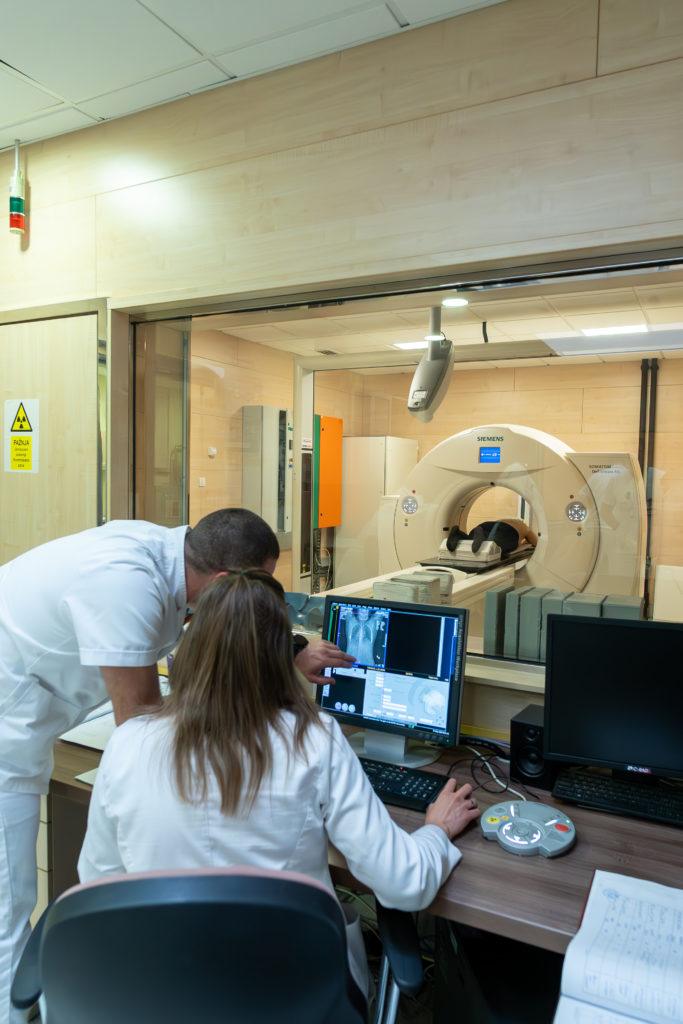
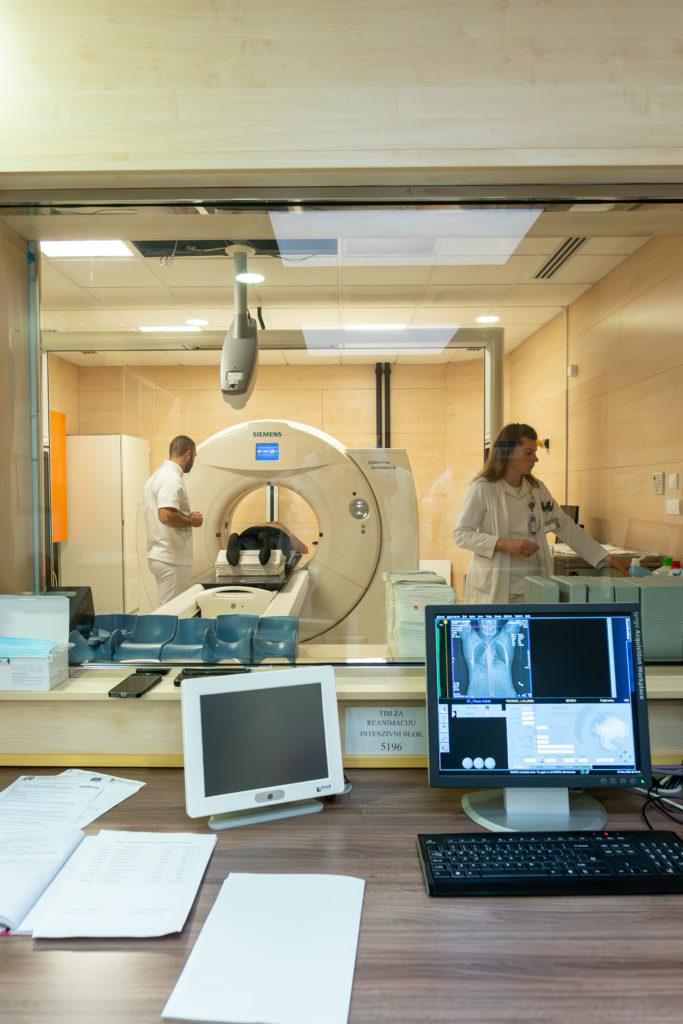
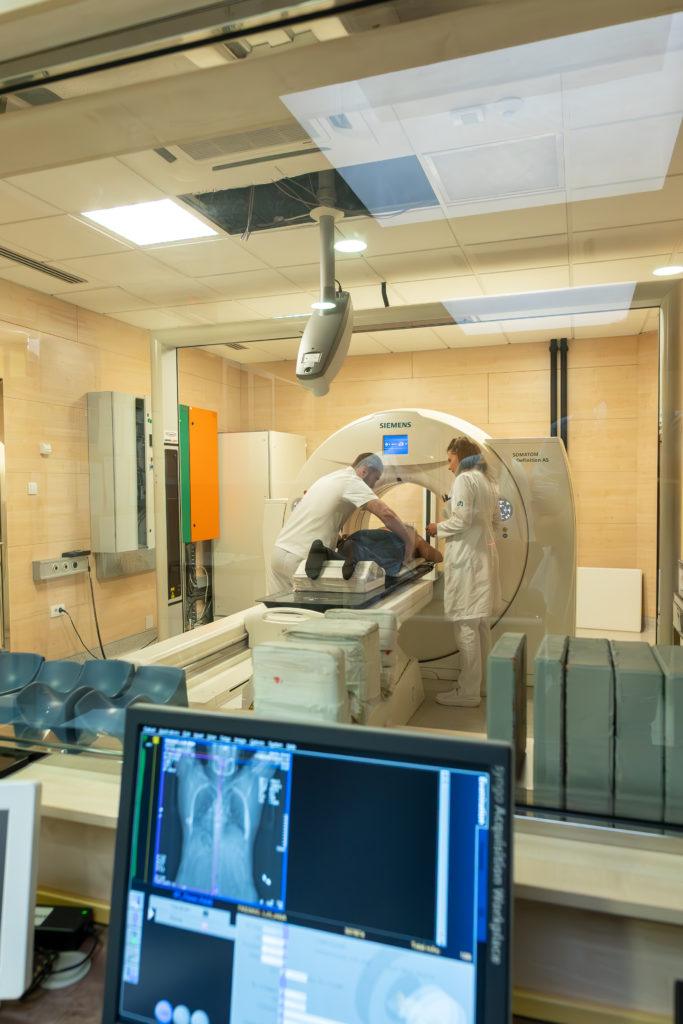
- CT simulator – a 24-slice Siemens CT simulator, used for CT imaging of patients in a precisely defined position with the help of immobilization equipment, identical to how they will be irradiated on the linear accelerator, and performs RT reconstruction of the obtained images,
- Monaco Radiotherapy Planning System – a very complex and powerful computer software, to which reconstructed CT images are exported from the CT simulator, on which the specialist physician performs delineation of specific volumes (tumor, regional lymph nodes, and at-risk organs), while the medical physicist arranges the radiation beams based on the physician’s instructions, strictly adhering to certain limitations (how much surrounding healthy tissues and organs may receive radiation dose and homogeneous irradiation of the tumor with the dose prescribed by the physician),
- Mosaiq Information Verification System – a complex software that connects the entire RT system into a closed loop – circulating information about the patient, the patient’s radiation plan from the planning system, which is used for patient irradiation and verification of the patient’s plan on the radiation device,
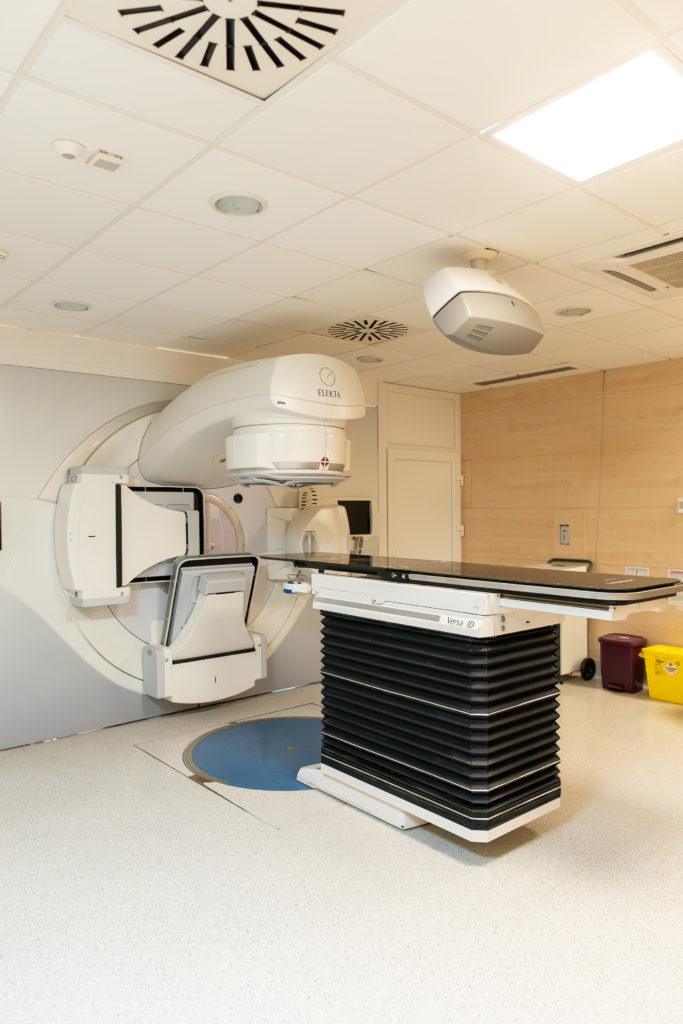
- 1 high-energy linear accelerator Versa HD, manufactured by Elekta, which enables photon and electron radiation of various energies, where senior radiological technicians perform plan verification, as well as the actual radiation treatment of the patient in collaboration with the specialist physician, and QA procedures conducted by medical physicists.
It is essential to emphasize the exceptional importance of teamwork among physicians, medical physicists, and senior radiological technicians, which is necessary for the successful implementation of the planned treatment of patients.
RADIOTHERAPY
In the Radiotherapy Department, radiotherapy is conducted for patients suffering from lung cancer, based on the decision of the Oncology Committee of the Institute for Lung Diseases of Vojvodina.
Radiotherapy can be administered independently or in combination with other treatment modalities, surgery, and systemic therapy. In relation to surgical treatment, it can be preoperative and postoperative, and in relation to chemotherapy, sequential (after chemotherapy) or concomitant (chemoradiation).
Radiotherapy can also be radical or palliative. Radical or curative treatment is conducted with the aim of completely destroying the tumor, while palliative radiotherapy is performed in advanced stages of the disease, with the goal of alleviating the patient’s symptoms (reducing pain, stopping bleeding, easing breathing).
When the Oncology Commission makes a decision for radiation therapy, the patient is placed on the list for radiation in the Health Information System of the Institute for Lung Diseases of Vojvodina. According to this list, patients are scheduled for a CT scan for radiotherapy planning.
At the scheduled appointment, the patient first arrives at the radiology outpatient clinic with the requested findings: complete medical documentation, new results of CBC, urea, and creatinine. The specialist radiation oncologist once again verifies the medical documentation, conducts a conversation with the patient, performs a clinical examination of the patient if necessary, and informs them about the further procedures and possible complications during radiation therapy. At this time, it is determined whether the radiation therapy will be conducted in inpatient or outpatient conditions.
If all medical parameters are met, the specialist physician refers the patient for a CT scan to plan a specific region and issues a report on the procedure performed. After the CT scan is completed, the specialist physician reviews the CT images and decides whether to proceed with the procedure. The patient is then referred home. Based on the completed CT scan of the specific region (thorax, head, spine, pelvis), planning for radiotherapy is initiated, involving the specialist physician in radiation oncology and a medical physicist. Once the planning is completed, the plan is verified with the participation of the specialist physician and the medical physicist. After the verification and approval of the plan, the plan data is transferred via Mosaiq information system to the linear accelerator software, and everything is then ready for the patient’s radiation treatment.
After that, the patient is informed by phone about the start date of radiation therapy. If the patient is treated in a hospital setting, they are hospitalized before the start of radiation. If treated on an outpatient basis, they come for radiation at the scheduled time.
In the Department of Radiotherapy at the Institute for Lung Diseases, patients suffering from lung cancer are routinely treated with 3D conformal radiotherapy. Recently, we adopted one of the advanced radiation therapy techniques: IMRT – intensity-modulated radiation therapy, and we plan to soon initiate another advanced technique, VMAT – volumetric modulated arc therapy. 3D conformal radiotherapy allows for the application of quality radiotherapy for our patients, but these two new advanced techniques will significantly enhance the quality of radiotherapy for patients suffering from lung cancer at the Institute for Lung Diseases of Vojvodina.
With the opening of the Department of Radiotherapy, the Institute for Lung Diseases of Vojvodina is now able to provide comprehensive treatment for patients suffering from lung cancer.